The fleet you should be running, beside the one you do.
Once every vehicle has an honest record of what it actually did, planning the next one stops being an opinion. The forward fleet is what falls out: every role profiled from evidence, every candidate weighed against your own priorities, every change costed, recomputed as the record grows.
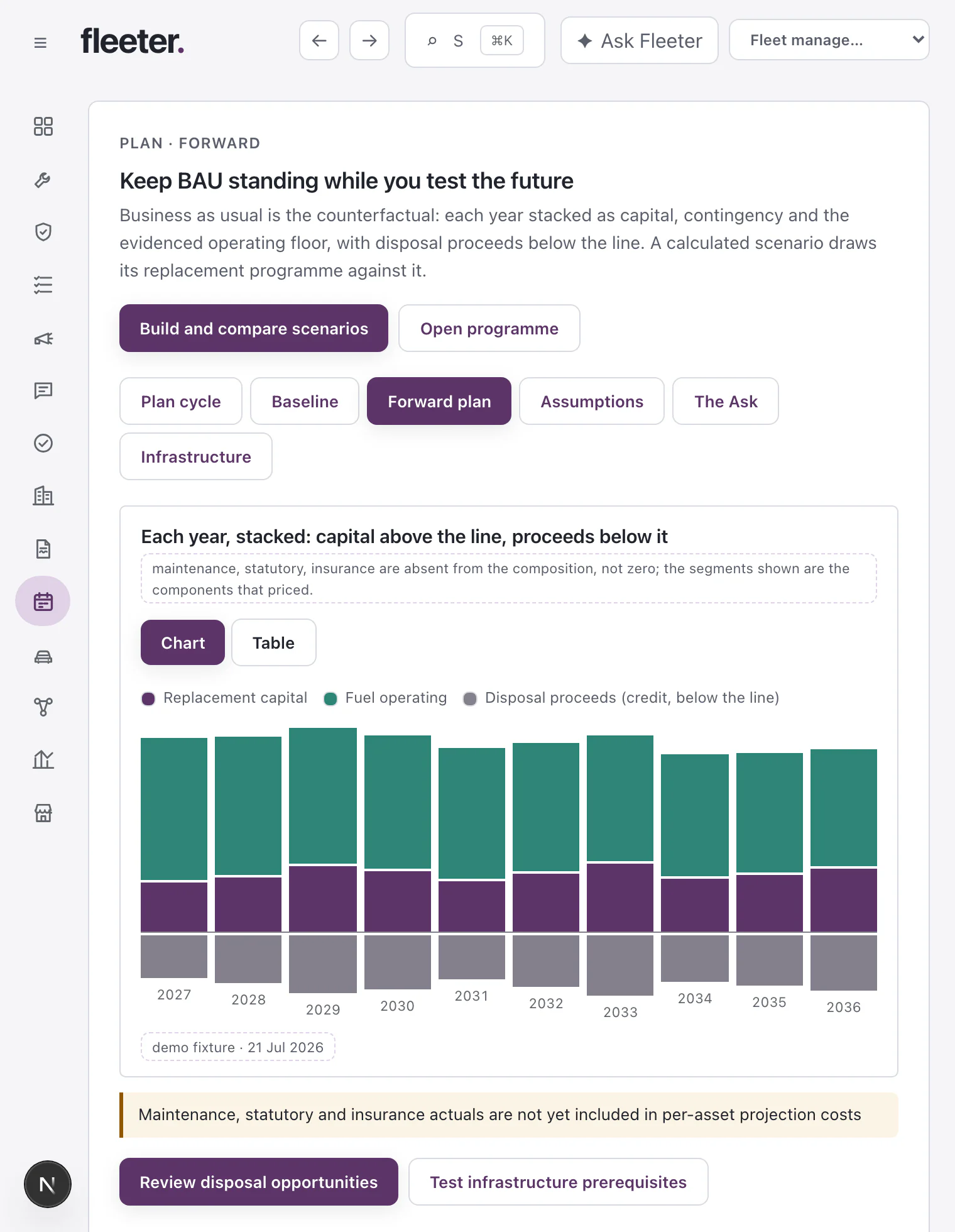
The interface as it is built. Sample data, not a customer’s.
The quarter-million-dollar fleet review, retired.
Plan the role, not the vehicle.
Baseline what the fleet really does
Fuel, trips, odometers, bookings: the record of what actually happened, not what the logbook claims. It becomes a usage profile per role: the busy days, the loads, the ranges, the idle weeks.
A fleet is a set of jobs
The parks run, the on call ute, the pool sedan. Each role carries what it truly demands, learned from its own history. Vehicles fill roles for a while and move on. The role is what you plan.
Weighed the way you choose to run
Safety as a hard gate. Then your weighting of whole of life cost, emissions and capital, set once and applied consistently to every decision, for your organisation rather than anyone’s brochure.
Procure to the role, with reasons
When a lease ends the recommendation leads with why, and the options ruled out show their reason in plain words. Choose differently and you are asked for a sentence. Both are recorded.
Walk in with the briefing.
One tap turns the quarter into a board ready document: the headline numbers, the glide path to your target, what was absorbed without a human and what reached an executive, every figure carrying the mark that traces it to its source. Export the PDF and walk in. Nothing on that page is a number you will have to retract.
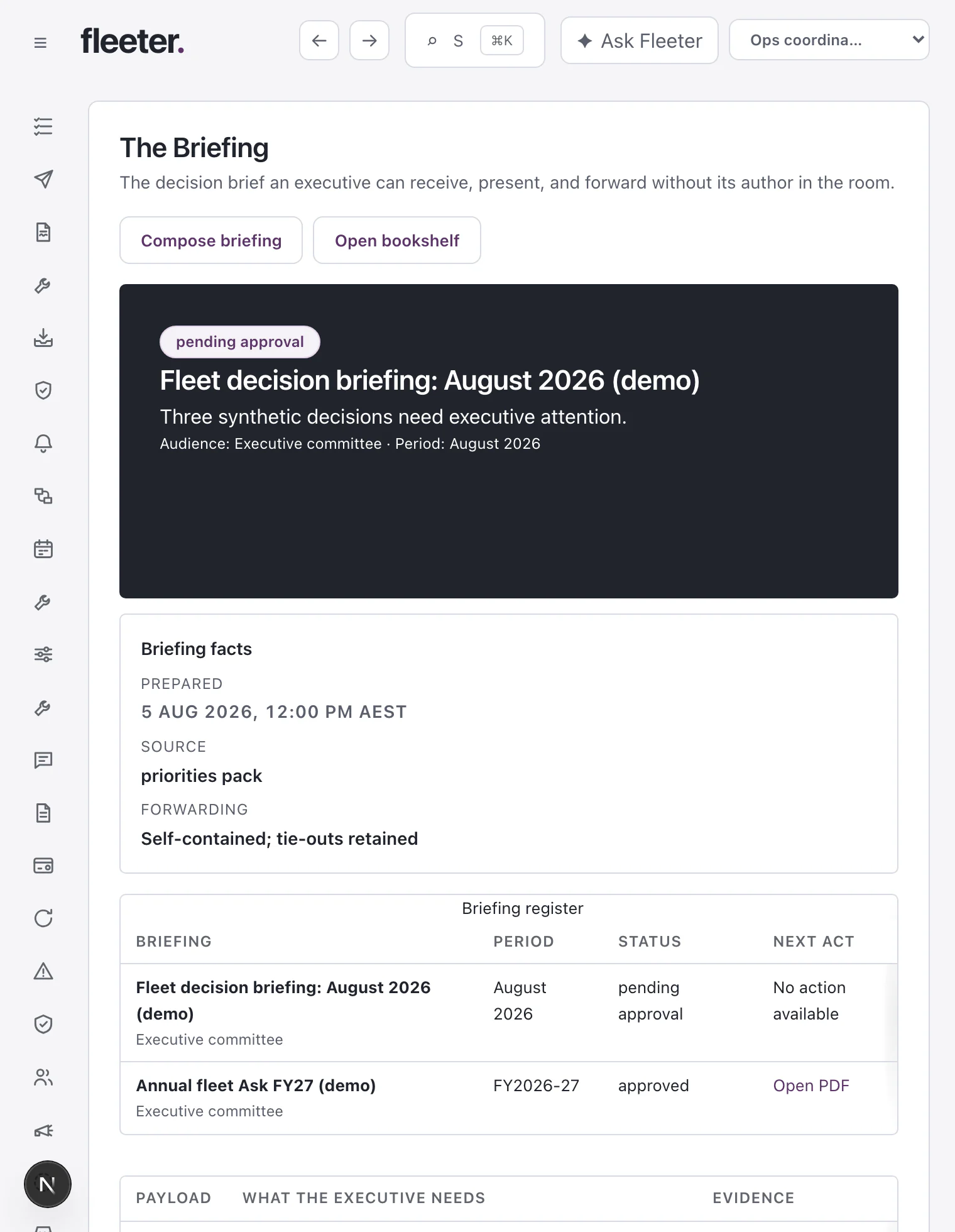
The interface as it is built. Sample data, not a customer’s.
One file is enough to start.
A fuel card statement on its own builds the first version of the register: every vehicle the fuel lines reveal, what it is costing to run, and where the replacement candidates are. Add your asset register when you have it and the picture sharpens to the VIN.
- Start withA fuel card statement. CSV, spreadsheet or PDF, straight from your card provider
- Add when you canYour asset register. a spreadsheet is fine: vehicles, plant and equipment
- Out the other sideYour baseline and forward fleet. roles, gaps, and the first prepared decisions
Drop a fuel card statement. See your fleet.
One month is enough to start, twelve is better. Out the other side: the register the fuel reveals, the fleet you should be running beside the one you do, and Scope 1 from every line.
- BP Plus and BP Fleet transaction reports
- Ampol StarCard and FleetCard, formerly Caltex
- AmpolCard tax invoices, as PDF
- Shell Card transaction reports, from Viva Energy
- WEX and Motorpass purchases by cardholder
- Your own depot bowsers or in-house fuel log
CSV, spreadsheet or PDF. Card numbers are blanked the moment a file is read, and nothing touches your live systems.
And when you are ready to run on Fleeter: onboarding is staged on your real data, mapped, validated and reconciled beside your current system, with nothing going live until you approve it. Going live is a deliberate, recorded act. No cutover cliff, no horror story.
See your forward fleet on your own evidence.
A fuel card statement is enough to start. We will baseline what your fleet actually does and show you what should replace it, role by role, with the arithmetic visible.